My First Movie: RUBBERHEAD: The Life & Monsters of Steve Johnson


 Apple Podcasts

 Spotify

 Castro

 RSS Feed
Whats up everyone, I know there’s been a lot of radio silence and it’s because, I’ve been promoting my film, that’s right, I made a film, and I’ve been promoting it on the festival circuit.
My movie is called RUBBERHEAD: The Life & Monsters of Steve Johnson, and it’s a documentary about Steve Johnson, who is one of the most legendary, prolific, accomplished, and wild practical effects artists in cinema history.
I joined Christian Zyp on Moving Radio, Chris dela Torre on The Homestretch, and Kaamil Kareemi on Sonic Cycle while promoting Rubberhead: The Life and Monsters of Steve Johnson at CUFF.Docs. Across these three interviews, I talk about my long relationship with Steve, the history of practical effects, and the choices that shaped the documentary.
I reflect on making my first feature documentary, balancing admiration with an honest portrait, and finding the story over five years of filming. I also discuss Steve’s influence on horror effects, the rise of CGI, the film’s reception at Fantasia, and why I wanted Rubberhead to entertain and move horror fans and newcomers alike.
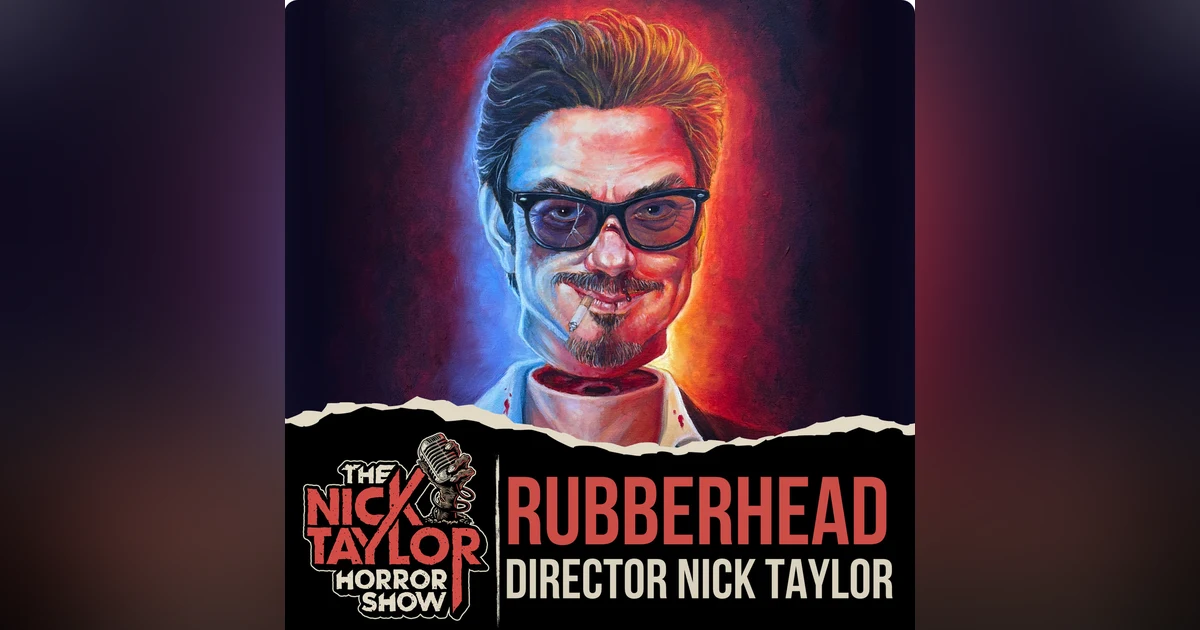
On today’s episode of The Nick Taylor Horror Show, I share conversations from my three CUFF.Docs interviews.
Show Notes
Movies and Shows Mentioned
- Rubberhead: The Life and Monsters of Steve Johnson
- Ghostbusters
- Species
- Fright Night
- Child’s Play
- The Abyss
- The Howling
- An American Werewolf in London
- Phantom of the Opera
- Big Trouble in Little China
- Frankenstein
- Scare Tactics
- Hollywood Horror Hall of Fame
- Frankenstein Complex
- The Wolf of Wall Street
- The Jetsons, live-action project
- The Backrooms
- Marvel movies
- You Can See Everything
- Books and Resources
- Steve Johnson’s book, discussed as an inspiration for the documentary
- The Howl, Nick Taylor’s monthly horror newsletter
- JoBlo
- Dread Central
- Cuff Docs
- Fantasia Film Festival
- XFX, Steve Johnson’s effects company
People Mentioned
- Nick Taylor
- Steve Johnson
- Christian Zyp
- Chris dela Torre
- Kaamil Kareemi
- Laura Carlson
- Linnea Quigley
- Tom Savini
- Kane Hodder
- Jack Pierce
- Lon Chaney
- Lon Chaney Jr.
- Dick Smith
- Rick Baker
- Rob Bottin
- Screaming Mad George
- Greg Nicotero
- Howard Berger
- Sam Raimi
- Tom Holland
- Joe Krings
- Brett Morgen
- Robert Evans
- Joe Dante
- Mick Garris
- Tim Burton
- Nicolas Cage
- Kane Parsons
- Curry Barker
- Nathan Fielder
- Hunter S. Thompson
- Miles Davis
- John Coltrane
Key Takeaways
A childhood influence can point toward a life’s work.
Nick first saw Steve Johnson on television while growing up as a young horror fan who felt like an outsider. Steve showed him that a life in horror and practical effects was possible. Years later, after meeting Steve at Monsterpalooza and reading his book, Nick saw a story worth bringing to the screen.
Steve’s career connects several eras of effects history.
Steve worked on The Howling with Rob Bottin and An American Werewolf in London with Rick Baker before creating effects for films such as Ghostbusters and Fright Night. Nick frames Steve’s story within a longer history that includes Lon Chaney, Jack Pierce, and Dick Smith, whose innovations helped shape modern prosthetic makeup.
Practical effects require many kinds of artists.
Effects artists draw, sculpt, paint, engineer, and apply knowledge of human and animal biology. Nick describes the work as requiring the range of skills associated with a Renaissance artist, often under intense production pressure.
Innovation gave Steve’s studio a distinctive model.
At XFX, Steve maintained a full-time staff with health insurance and supported teams who developed new techniques, even when no film was waiting to use them. Nick compares the studio’s research and development approach to Google’s, while noting the high cost of that ambition.
The film presents Steve’s strengths and damage together.
Nick wanted a “warts and all” portrait rather than a tribute that only celebrates Steve’s achievements. The documentary considers his creativity and influence alongside addiction, self-destruction, and the effect those struggles had on his career and relationships. Nick leaves viewers room to judge Steve for themselves.
Getting past the performance took time and trust.
Steve often approached interviews like a showman, keeping up a funny, entertaining persona. Nick found that quieter moments came more easily during one-on-one filming, after building a relationship with Steve over the documentary’s five-year production.
A close relationship does not remove the need for fairness.
Nick became Steve’s friend and deeply respected his contribution to cinema. He also felt responsible for making a film that could stand on its own, rather than a fan documentary. His goal was to give horror fans a satisfying account while making Steve’s story accessible to viewers outside the genre.
An editor can help a director see the story clearly.
An early cut built around Steve telling his own story felt incomplete. Nick chose to film additional interviews, which brought more perspectives into the documentary and changed its direction. Editor Joe Krings, who was not a horror fan, helped keep the film focused on story rather than effects Nick personally wanted to include.
Good material still needs to serve the film.
Nick cut several favorite scenes because they slowed the story down. He describes learning to “kill your darlings” and make choices based on the documentary’s structure, even when the scenes were funny, visually impressive, or well paced on their own.
Practical and digital effects work well together.
Nick supports using digital effects when needed, while arguing that practical builds give audiences a physical sense of weight and reality. After years of CGI fatigue, he sees practical sets, creatures, stunts, and explosions as ways to make a film feel tangible.
A documentary about horror can reach beyond horror fans.
Nick wanted Rubberhead to work as a lively portrait of an artist, not an academic lesson or an insider-only tribute. At Fantasia, viewers responded with laughter, gasps, and unexpected emotion. Some people who were not horror fans connected with the film’s questions about creative work and life choices.