THE BLACK PHONE 2 Composer | Atticus Derrickson
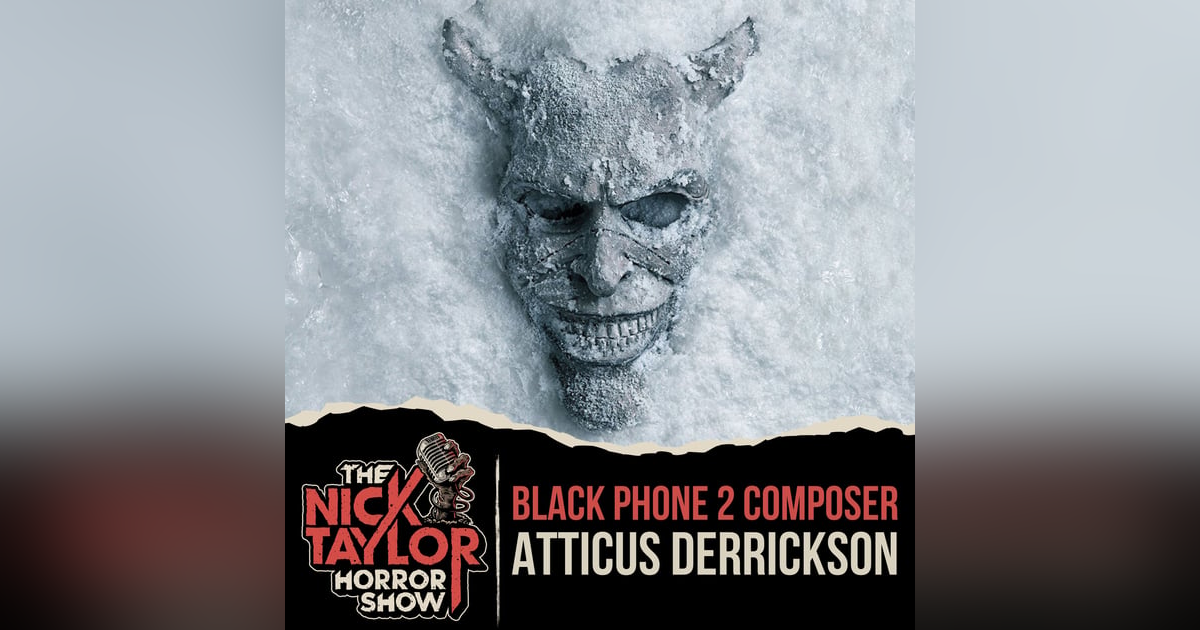


Atticus Derrickson is a composer and music producer who recently scored The Black Phone 2. He is also the son of Scott Derrickson, director of both Black Phone movies, Sinister, and many others. In this conversation, Atticus and I get into composing horror scores, how to achieve fear through sound design, and much much more.
Show Notes
Movies and TV Mentioned
- The Black Phone 2
- The Black Phone
- Sinister
- V/H/S 85
- Smile
- The Witch
- The Lighthouse
- Shadow Crawler (Short)
People & Artists Mentioned
- Christopher Young
- Tangerine Dream
- Vangelis
- Cliff Martinez
- Mark Korven (including his “Apprehension Engine”)
- Throbbing Gristle
- Chris Carter (Throbbing Gristle member referenced in gear discussion)
- Ulver (band whose music is used in the Sinister tapes discussion)
- Scott Derrickson
- Joe Hill
- Adam Hendricks
- Lou Ford (editor)
- Luciano (sound designer)
- Marina Moore (string player)
- Robert Eggers
Gear and Music Tech Mentioned
- Prophet synthesizer, including Prophet-5 and Prophet-10
- John Carpenter style synth
- Crystallizer pedal recreation from Dirt Monger Instruments
- Logic Pro X
- Canter reel (used to create drone textures)
- Dulcimer (used in experimentation)
- Atmos and surround mixing formats, including 5.1
Physical Media
- Waxwork Records vinyl release for The Black Phone 2 soundtrack
Key Takeaways
Start early and let tone guide the whole production.
Atticus began writing tonal score pieces before the script was even finished. That let production carry his music into the shoot, so the score could help dictate direction. A lot of those early pieces ended up in the final film because they already lived inside the world of the story—and inside the director’s head.
This is why Atticus recommends avoiding temp tracks: they can be a trap, tying you to a specific (often derivative) sound instead of pushing you toward something new. Working this far upstream also allows for a more holistic approach to scoring the film. The tone and feeling of Black Phone 2 is one of the things that made it so distinctive, and a big reason is that the score was completely original rather than shaped by temp music.
Merge score and sound design for unified texture.
Atticus describes a constant collaboration with the sound designer and mixer so elements like static, wind, and snowy ambience could interlock with the music instead of competing with it. The goal was one cohesive system—where sound design and score feel like the same organism. As a result, the movie has a very strong sense of surrealism that makes you feel like you’re in a very beautiful nightmare.
Protect what’s working.
Atticus told a story about a final music cue that had to be shortened to fit the edit. When he tried to cut it down, he realized it damaged the overall effect, so he fought to keep the full cue intact—and won. As a result, the scene works beautifully. Whether it’s a music cue or any other element, sometimes something is perfect as-is and it’s the surrounding pieces that need to be reshaped to support it. When something is working, protect it.
Follow Atticus Derrickson at:
- IMBd: https://www.imdb.com/name/nm12279894/
- Instagram: https://www.instagram.com/atticusderrickson
- Spotify: https://open.spotify.com/artist/1ZAQG5e9sxTTkxKjr5OcLs?si=bT32GgkJTpKHqThqabqT1A


