MORTUARY ASSISTANT | Director Jeremiah Kipp
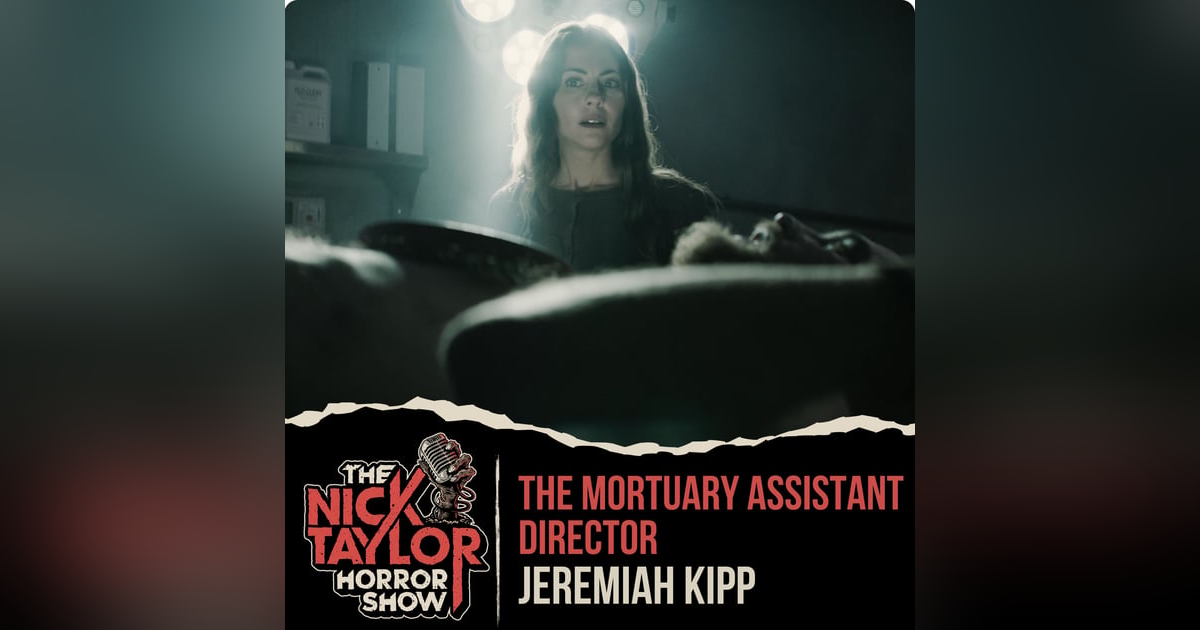


Jeremiah Kipp is a New York–based horror filmmaker whose work includes The Sadist, Slapface, and The Geechee Witch: A Boo Hag Story. In this episode, Jeremiah breaks down his expansive career journey and finely tuned process for working with actors, maximizing low budgets, and keeping sets running smoothly. Jeremiah also discusses the importance of mentorship in his career, including his longstanding relationships with genre greats, and former guests of the show, Larry Fessenden and Jim Mickle. And of course, we dive deep into his most recent feature, the adaptation of the viral video game The Mortuary Assistant, coming to Shudder on March 27th. Without further ado, here is Mortuary Assistant Director, Jeremiah Kipp.
KEY TAKEAWAYS
Choose Material That Speaks to You Personally
Jeremiah initially had little interest in adapting a video game. But when he played The Mortuary Assistant, he connected deeply to the protagonist, Rebecca Owens, a woman who hides inside her work to avoid confronting her personal demons.
That personal entry point became his entire pitch: preserve the game’s dread and atmosphere while grounding the film in emotional vulnerability. He and game creator Brian Clark bonded over shared anxieties and experiences, and it became the start of an excellent collaboration because Jeremiah was able to relate to the material on a deeply personal level.
When directing, it’s critical to put a big part of yourself into your projects, otherwise, why should you be the one to direct it?
If you can’t channel personal experience into a movie, or if the producers don’t leave room for that, it might not be the right fit for you, and that’s fine. Find the emotional core that connects to your own life or unique sensibility. Otherwise, the movie becomes just a gig. Producers can tell when your heart isn’t in it. Audiences can too. Make it personal, or don’t do it.
Make sure Everyone is Rowing in the Same Direction
The Mortuary Assistant, a very creatively unified, cohesive production as opposed to an earlier project that Jeremiah passed on where the vision kept shifting. That earlier project had producers that first wanted Blair Witch-style dread, then Herschell Gordon Lewis gore, then something akin to Black Phone. This unfocused behavior is a MASSIVE red flag, and even if you’re just starting out, you should run because you’re probably being setup to fail. Of course, not everyone is going to agree and get your vision, but if producers don’t know what they want, or you’re getting massively conflicting feedback from those you’re meant to report to, no one will win, and you as the director will get all the blame.
As Budgets Increase, Money Feels Smaller
Jim Mickle warned Kipp: “As you move up the budget ladder, it feels like you have less money.” This is a fascinating paradox but really makes sense when you think about it. More money means more department heads, larger builds, higher actor costs, bigger expectations, more moving parts, and less margin for error. More money means better production value but often less time and less freedom. We all want bigger budgets but, heed this warning going in.
De-escalation Is a Crucial Leadership Skill
Movie-making is grueling and involves long nights, early mornings, physically punishing days, little sleep, and less-than-adequate nutrition from crafty — all within a high-pressure environment. In other words, it’s a recipe for potential volatility among those involved. Things go wrong on sets, tensions run high, and having worked on as many movies as he has, Jeremiah learned that de-escalating situations is a critical skill.
A lot of would-be directors expect to take on a domineering presence where they demand full obedience from everyone on set. This attitude will have your cast and crew turning on you by day one, and your movie will suffer for it. Instead, assume a posture of humility. Take your ego out of volatile situations to relieve tension — even when the people you’re dealing with are the ones at fault.
You gain nothing by arguing or by being “right,” especially if it comes at the expense of someone else. Your goal should never be to win or assert dominance, but to keep the movie on track by stabilizing those working around you. It’s massively humbling but absolutely critical.
This doesn’t mean you tolerate blatant disrespect. But avoiding needless confrontation doesn’t make you weak; it makes you smart because you’re protecting the steadiness of your production. One bad attitude can poison a set quickly, so it’s critical to protect morale at all costs and handle conflict privately and strategically. The real leadership flex is emotional regulation.
Show Notes
Movies Mentioned
- The Mortuary Assistant
- Slapface
- The Geechee Witch: A Boo Hag Story
- The Babadook
- Hereditary
- The Witch
- I Sell the Dead
- Fried Barry
- Halloween (John Carpenter)
- Dawn of the Dead (George A. Romero)
- The Last of Us
- Super Mario Bros. (film)
- Blade Runner
- Doom (film)
- The Meg
- The Autopsy of Jane Doe
- Bernie
- Re-Animator
- Gremlins 2: The New Batch
- Stranger Things
- Scary Stories to Tell in the Dark
- Hellraiser (referenced via Cenobites discussion)
- Nightmare Cinema
- Masters of Horror (Joe Dante episodes)
- Mad Max: Fury Road
- Gremlins 3 (discussed as greenlit)
- Hellbender
- Mother of Flies
- What Josiah Saw
- Take Shelter
- Superman (film referenced in the “three takes” anecdote)
- Mulberry Street
- Stake Land
- Cold in July
- Wendigo
- The Thing
- Big Trouble in Little China
- Jurassic Park
- Pirates of the Caribbean
Books and Resources
- The Shining (Stephen King novel)
- Cold in July (Joe R. Lansdale source material referenced)
- IFP, Independent Feature Project (community and early career filmmaking support)
- Probe lens (used for extreme close-up mortuary procedure imagery)
- Mood boards and style guides for aligning producers and creative vision


