BODYCAM Director | Brandon Christensen
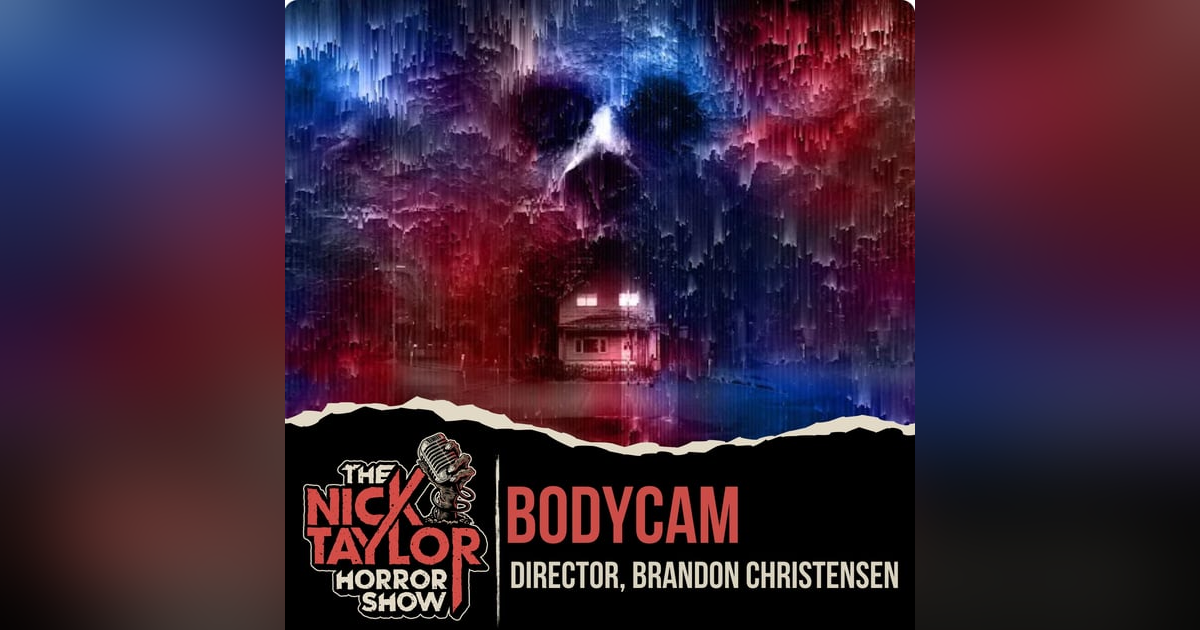


Brandon Christensen is back. A Canadian horror filmmaker, his recent run includes Puppet Man, Night of the Reaper, and his most recent release, Bodycam.
Brandon writes, directs, produces, edits, and often handles visual effects on his own films, building ambitious genre work by keeping crews small, budgets tight, and the process intensely hands-on.
In this episode, Brandon breaks down the making of Bodycam, his found-footage feature told entirely through police body cameras. He also gets into how he’s been able to release four movies in the past six years, and shares his model for low-budget, high-impact horror filmmaking. On today’s episode of The Nick Taylor Horror Show.
Key Takeaways
Spend on the people who can solve whole categories of problems.
Rather than building a big crew, Brandon focuses on hiring a few choice highly capable collaborators who can wear multiple hats. He cites cinematographer Clayton Moore as a key example, since Clayton handled the camera system and also rolled sound during takes, which freed up money for other departments. His larger point is that on movies with this low of a budget, the trusted and dedicated people can be far more valuable than a larger headcount. Brandon’s approach is not about dismissing department but more about building a lean team around the specific needs of the movie.
Shoot in Calgary or other undiscovered production hotspots.
Brandon makes a strong case for building films in places like Calgary, where the production environment still works in an independent filmmaker’s favor. In his experience, the city offers a rare combination: people are less jaded by film shoots, locations are more attainable, and the city access can deliver real scope on screen. This all matters because production value is often less about how much money you have than how much access you can get. Brandon was able to pull off some very high production value scale on Bodycam, and it was largely due to having a very accessible production city.
Brandon was able to use large houses, full streets, city blocks, and striking urban spaces that made the film feel much bigger than its budget. In a more production-saturated city, many of those same locations may have been harder to secure, more expensive, or simply out of reach for a small indie team. Calgary gave him room to move, and the movie benefits from it in every frame.
Build a sustainable career where you can keep making things.
Brandon is candid that the traditional studio path no longer appeals to him the way it once did. At this point in his life, he would rather keep making movies he can control than spend years in meetings chasing permission and larger budgets. Brandon is in his forties, has three kids, and no longer wants to organize his career around endless travel and meetings when he can continue making movies in Alberta. The deeper meaning of this conversation is that Brandon’s system is not just a production model; it is a life model. He wants to keep directing, keep learning, and keep getting back on set without sacrificing everything else. For filmmakers, that is a valuable perspective: sustainability is part of the craft.
Show Notes
Movies Mentioned
- Bodycam
- Puppet Man
- Night of the Reaper
- Superhost
- Hardcore Henry
- The Last of Us
Books and Resources
- Alberta Media Fund
- Mark Duplass
Follow Brandon Christensen at:
- IMBd: https://www.imdb.com/name/nm3417134/
- Instagram: https://www.instagram.com/thebrandonchristensen/
- X (Twitter): https://x.com/thebrandonc85
- Facebook: https://www.facebook.com/brandonchristensendirector/
- Website: http://thebrandonchristensen.com/


